

Houat & Hoëdic – The Sister Islands of Morbihan
In Breton, Houat means "the duck" and Hoëdic "the duckling". These two sister islands offer a genuinely exotic escape, with unspoilt nature, a preserved atmosphere and a rare authenticity in Brittany.
Lying 14 kilometres east of Quiberon (40–50 minutes by boat), Houat and Hoëdic are the very definition of a complete change of scenery. From Camping Les Druides in Carnac, a 30-minute drive from Quiberon, set sail for these islands of character, where cars are banned and traditional fishing lives on.
📌 About these destinations
Camping Les Druides recommends a visit to Houat and Hoëdic through its blog and its recommendation articles.
Please note: Houat and Hoëdic are freely accessible destinations managed by their respective municipalities and the Quiberon Bay tourist office. Camping Les Druides:
-
does not manage these destinations;
-
does not organise guided tours;
-
does not book ferry crossings.
We simply recommend these exceptional destinations to enrich your stay.
For any information on ferries, accommodation and activities, contact the Quiberon Bay tourist office directly using the details at the end of this article.
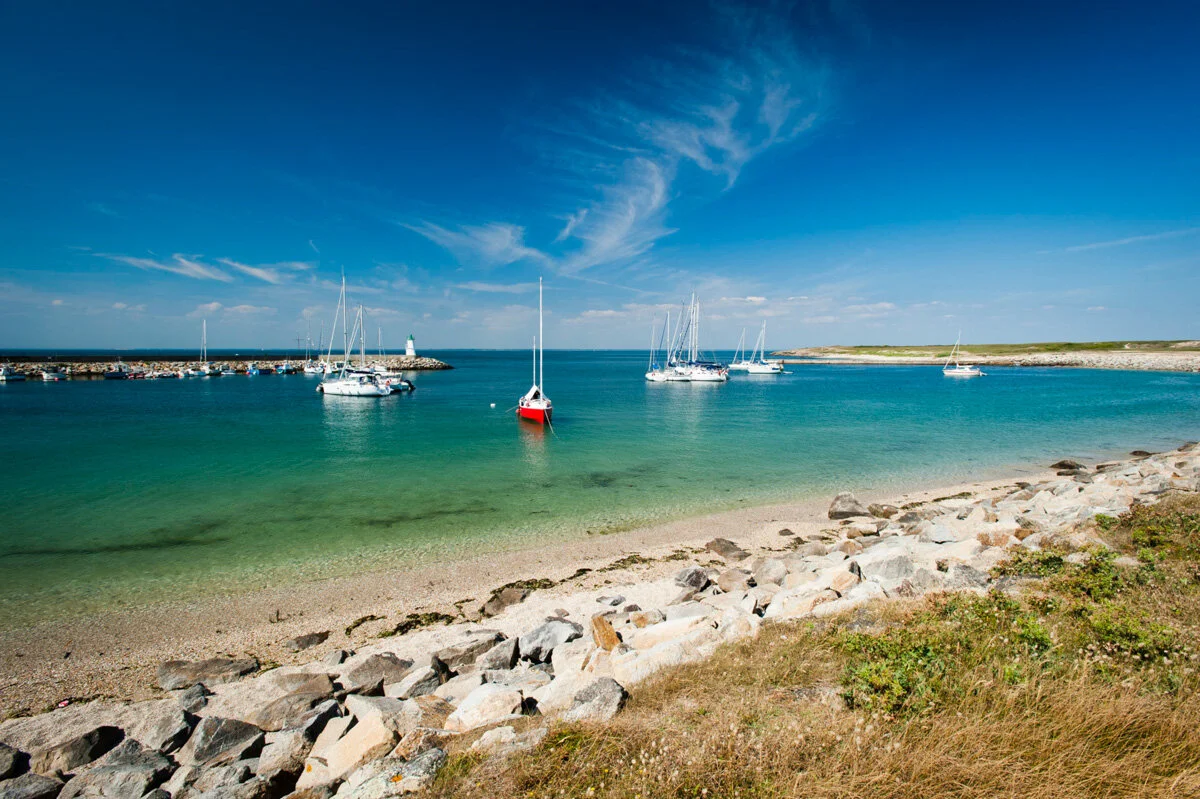
🏝️ Houat – "The Duck"
An authentic, preserved island
Houat is the larger of the two sister islands, at 3.3 kilometres long by 1.5 kilometres wide (around 288 hectares). Its permanent population is 210–220 inhabitants (the Houatais), a figure that grows tenfold in July and August.
Setting foot on Houat means discovering unspoilt nature: colourful heathland criss-crossed by sandy paths, picturesque coves with transparent water, and south-western cliffs cut by secret beaches. No cars drive on the island – only pedestrians and bikes.
Port Saint-Gildas – the heart of the island
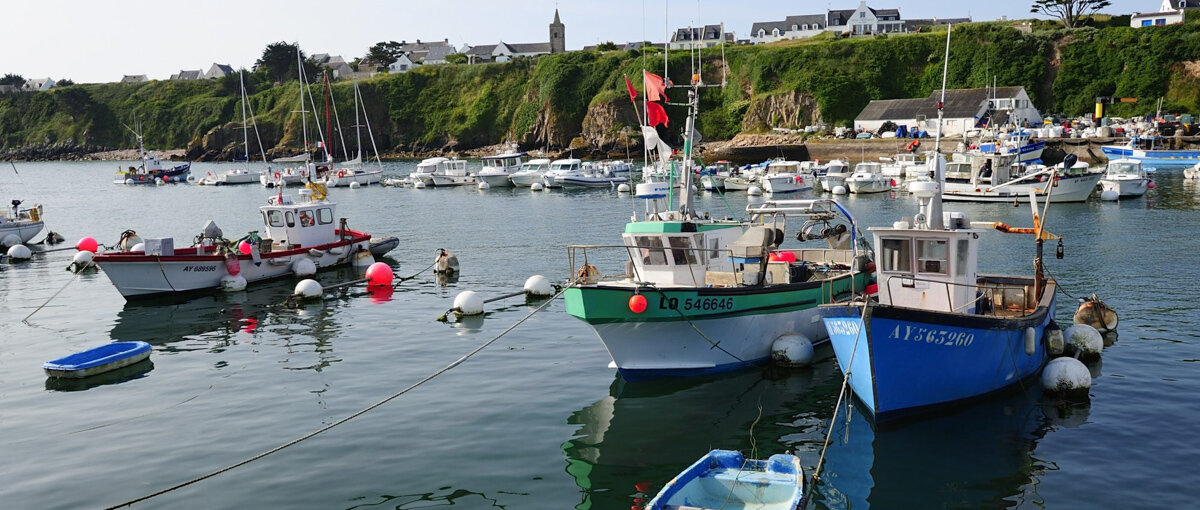
Port Saint-Gildas, built in 1956–57 after the old harbour was destroyed by a storm in January 1951, is the economic and social lifeblood of Houat. On the quays, 30 brightly coloured fishing boats sit alongside lobster pots stacked into blue and black walls.
Artisanal fishing is the true soul of Houat. Most of the working population are professional fishermen practising mixed fishing: lobster, crab, sea bass, conger eel and crawfish. The island even has a lobster hatchery, built in 1972, which shows how important this activity is.
The picturesque village
A short walk from the harbour, the village charms with its preserved authenticity: whitewashed houses lining the lanes, traditional blue shutters, and slate roofs sealed with cement to withstand the island winds. The steep lanes have the timeless atmosphere of a genuine Breton village, with no fuss.
Paths and beaches
The tour of the island (15 km of coastal path) takes 4–5 hours on foot. The south-western cliffs reveal heavenly coves, including the famous Treac'h er Goured beach with its fine sand, surrounded by dunes where protected sea lilies grow.
The west coast is home to the Beg er Vachif rock with its abandoned military battery, while the north coast offers gentler cliffs and lush vegetation.
⚠️ Please note: the water is very cold even in summer. Do not walk on the dunes, so as to protect the sea lilies and marram grass.
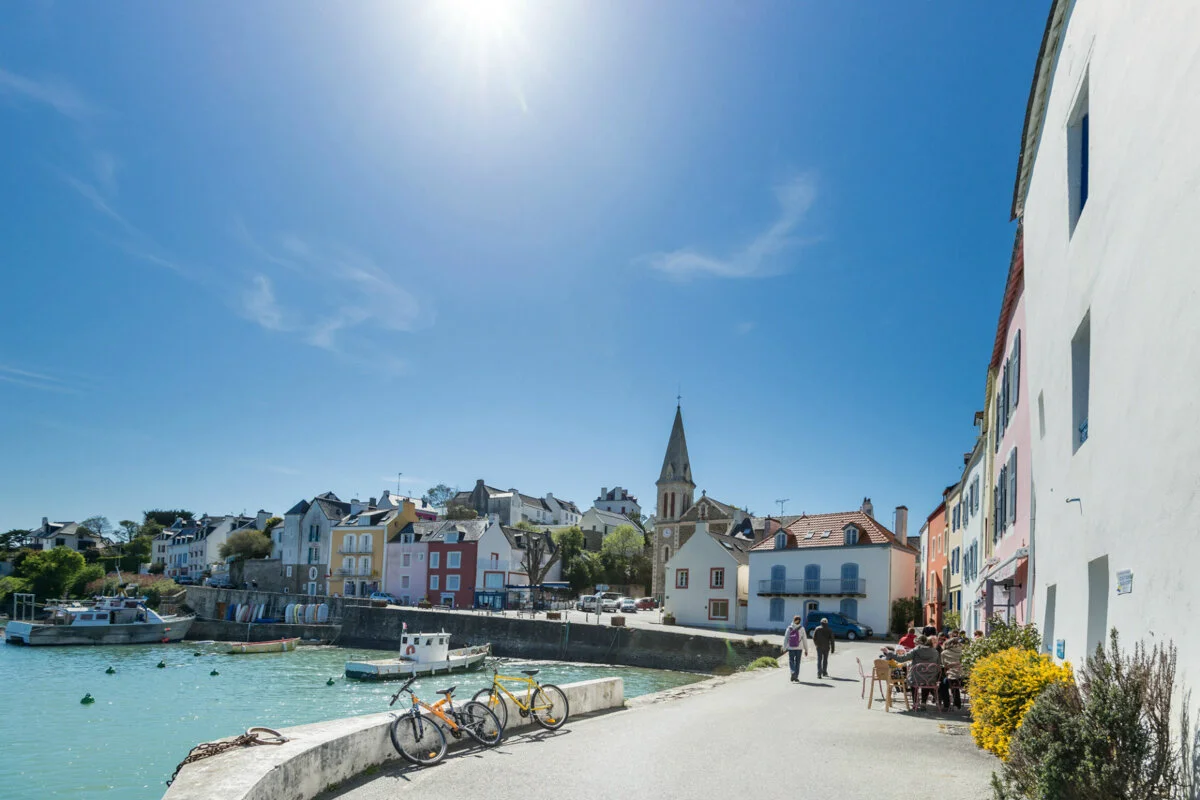
🦆 Hoëdic – "The Duckling"
The smallest inhabited island in Morbihan
Hoëdic measures 2.5 kilometres long by 1 kilometre wide (around 209 hectares), with only 40–50 permanent inhabitants (the Hoëdicais). It lies 5 km south-east of Houat, separated from it by the Passage des Sœurs.
Hoëdic has a peaceful atmosphere, quieter than Houat. The full circuit (8.5 km) can be walked in its entirety, revealing magnificent coves with crystal-clear water. The island has little shade: bring water and a hat.
A unique theocracy in history
Hoëdic has a political history unique in France. Between 1815 and 1825, the people of Houat and Hoëdic drew up a "Règlement" that served as a constitution for these small island "republics".
From 1822 to 1892, with no mayor on the island, the rectors (parish priests) of Hoëdic enjoyed a special status known as the "Charter of Hoëdic":
-
religious government led by the rector;
-
a sovereign rector in charge of both spiritual and civil administration;
-
partial autonomy that lasted into the 20th century.
This original system reflects the isolation of the island and the need for an autonomous local organisation. In the 17th and 18th centuries, Hoëdic was even coveted and periodically occupied by the English, who built military forts there; their remains can still be seen.
🛥️ Access and transport
Boat connections
From Quiberon (main port):
-
Crossing: 40–50 minutes (Houat) / 65 minutes (Hoëdic)
-
Distance: 14 km (Houat)
-
Frequency: all year round (at least 2 crossings a day)
-
Operators: Compagnie Océane (BreizhGo), Finistmère, NAVIX
Inter-island connections:
-
Houat → Hoëdic: 20–25 minutes (all year round)
-
Belle-Île to Houat/Hoëdic: seasonal, May to September (45–50 minutes)
Getting around the island
Houat and Hoëdic are 100% car-free:
-
✅ On foot: waymarked coastal paths
-
✅ By bike: hire available on Houat (classic and electric)
-
✅ Hiking: full circuits of both islands are accessible
📋 Practical information
Recommended length of visit
-
1 day: a quick visit to Houat (village and harbour) or the whole of Hoëdic
-
2 days: Houat in full, then Hoëdic on day 2
-
3+ days: the complete coastal paths with time for breaks
Best season
-
✅ April–May: mild, flowers in bloom, fewer tourists
-
✅ June–August: warm, all activities running, very busy
-
✅ September–October: perfect weather, calm returns
Essential tips
-
⚠️ No cash machine: withdraw money before the crossing
-
⚠️ Little shade: hat and water are essential
-
⚠️ Cold water: swimming is bracing, even in summer
-
✅ Take your rubbish with you: there are no bins in the countryside
-
✅ Keep to the paths: protect the fragile ecosystem
Services on the islands
On Houat:
-
3 restaurants serving freshly caught shellfish
-
Bike hire (traditional and electric)
-
Small-scale accommodation (a limited number of gîtes and guest rooms)
-
Museum: the Éclosarium and a discovery centre on the marine world
On Hoëdic:
-
Very limited services (smaller island)
-
Limited accommodation
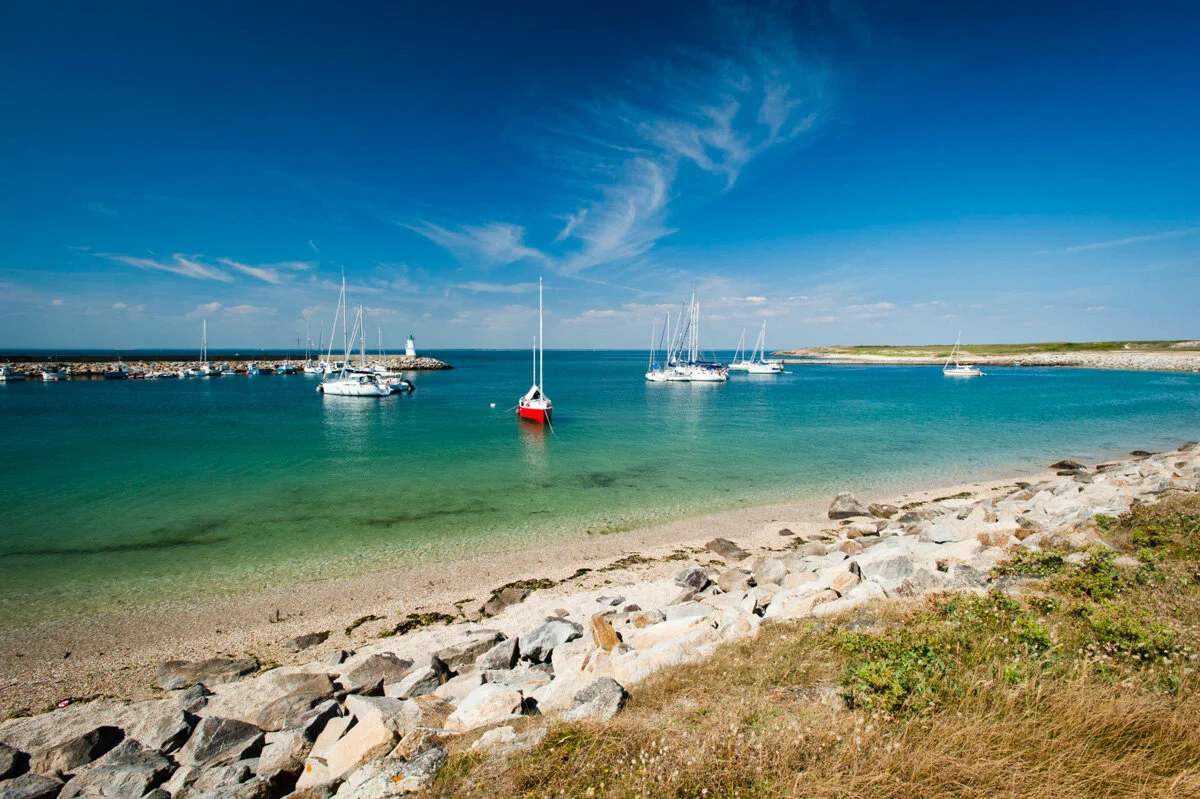
🏕️ From Camping Les Druides
The ideal base for the islands
Camping Les Druides is a practical base for Houat and Hoëdic:
-
✅ 25–30 km from Quiberon (main port)
-
✅ Easy drive of 30–40 minutes
-
✅ Free parking in Quiberon (Port Maria)
-
✅ Heated pool at the campsite to relax when you get back
The perfect combination: a day on the islands (boat and walking) → back to the campsite → relax by the pool! ☀️
✨ In short
Houat "the duck" and Hoëdic "the duckling" are sanctuaries of authentic nature. Between the picturesque lanes of Houat, a traditional fishing industry that is still very much alive, the unique historical theocracy of Hoëdic and the enchanting coastal paths, these islands offer an island experience unmatched in Brittany.
100% car-free, these preserved islands embody the very essence of island Brittany: wild nature, authenticity, a bond with the sea and a living artisanal tradition.
From Camping Les Druides in Carnac, less than an hour by road from Quiberon, set sail for these Breton jewels and a complete change of scenery.
📞 Practical information and contacts
Houat and Hoëdic are freely accessible destinations managed by their respective municipalities.
To book ferry crossings and accommodation on the islands, and for activities and up-to-date prices, contact the relevant organisations directly.
Quiberon Bay tourist office
Address: 14 rue de Verdun, 56170 Quiberon
Telephone: +33 2 97 50 07 84
Website: www.baiedequiberon.bzh
Email: contact@baiedequiberon.com
Information provided:
-
Ferry timetables and fares
-
Accommodation on the islands
-
Bike hire and activities
-
Guided tours available
Ferry companies
Compagnie Océane (BreizhGo)
Ferry terminal: Port Maria, Quiberon
Website: oceane.breizhgo.bzh
NAVIX
Telephone: 0 825 132 100
Website: www.navix.fr
For up-to-date ferry fares, check directly with the ferry companies.
Island town halls
Houat town hall
Address: Le Bourg, 56170 Houat
Telephone: +33 2 97 30 68 04
Email: mairie-houat@wanadoo.fr
Hoëdic town hall
Address: Le Bourg, 56170 Hoëdic
Camping Les Druides
Address: 55 Chemin de Beaumer, 56340 Carnac
Telephone: +33 2 97 52 08 18
Website: www.camping-les-druides.com/en
Distance: 25–30 km from Quiberon (30–40 min by car)
Services: heated pool, campsite bar (from 6 pm), information at reception, free parking